

Grant Stone Cap Toe Forest Kudu: Still Kicking
Price: $370
Why Buy?
The Grant Stone Cap Toe in Forest Kudu evolves in a really cool way, and is comfortable and well made, too.
Why Avoid?
The Grant Stone Cape Toe in Forest Kudu isn’t the most versatile boot, and is probably better for someone’s 3rd pair than their first.
Specs
| Model | Cap Toe |
| Height | 6″ |
| Size | 12 D |
| Weight | 968 g / 2 lb 2.1 oz |
| Materials | Kudu / Leather / Rubber |
| Construction | Goodyear Welt |
| Country of Origin | China |
History
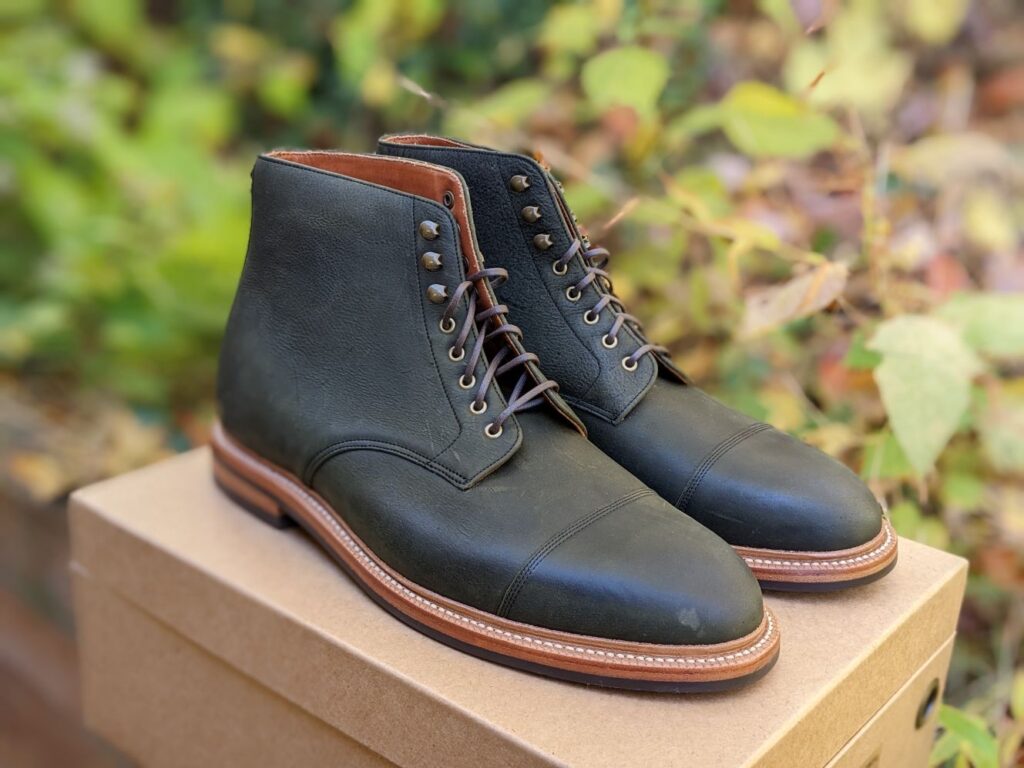
Back in 2022, we took an initial impression look at the Grant Stone Cap Toe in Forest Kudu. At the time, we felt it was nearly perfect in a world where you can’t bee too formal or too casual. However, since then, the world has changed again. More layoffs, more in office days, and more parties with friends. Can this boot stand up after being worn for 100 wears and 100 miles?
As we all know, it’s pretty easy to make something look good new, however over time – especially with unique materials – that can change. Let’s take a look at how these boots have evolved with wear, and if they are still something you might want to pick up for your own closet.
For awareness, I always try to wear footwear in the environment they were meant to be worn in. For this pair, that meant casual Fridays in the office, light wear around on sidewalks, and mostly sunny days.
Disclaimer: Grant Stone provided these boots for the purpose of a review. This is not a sponsored post, and Grant Stone was not given the opportunity to review, edit, or change anything about this review. All statements are my true opinions.
Looks
Upper

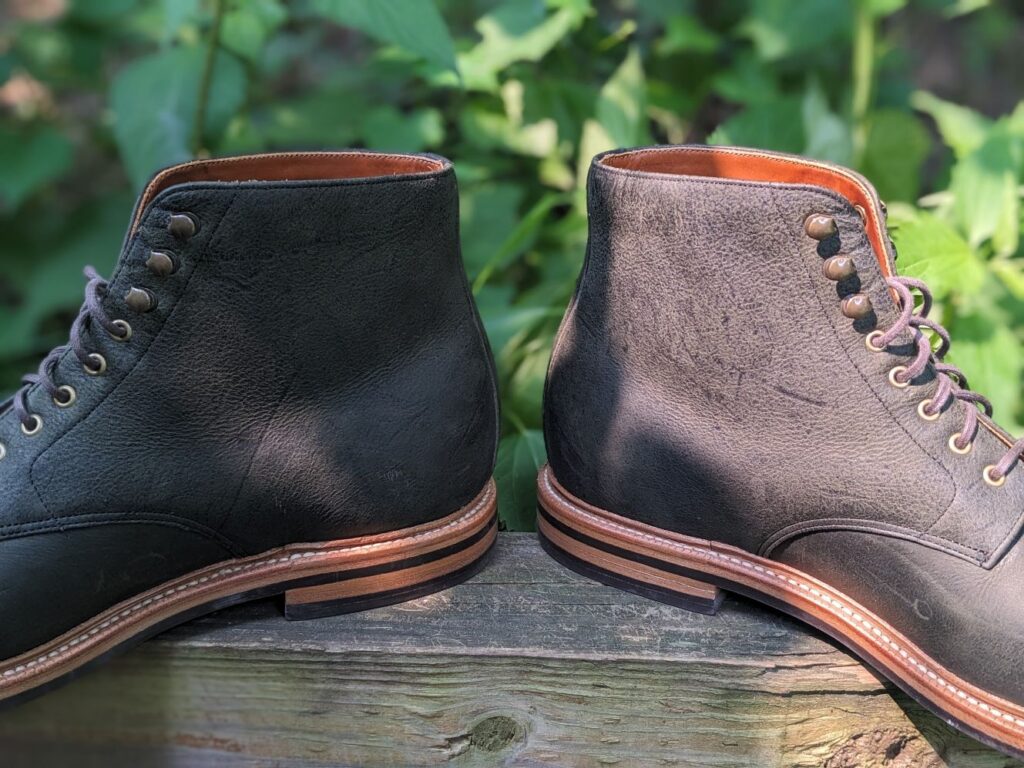
When it comes to the evolution of the Grant Stone Cap Toe in Forest Kudu after some wear, the biggest change is definitely in the appearance of the upper. The leather has evolved significantly. Much like the initial review, these changes are a bit hard to capture on camera, but you’ll just need to believe me.
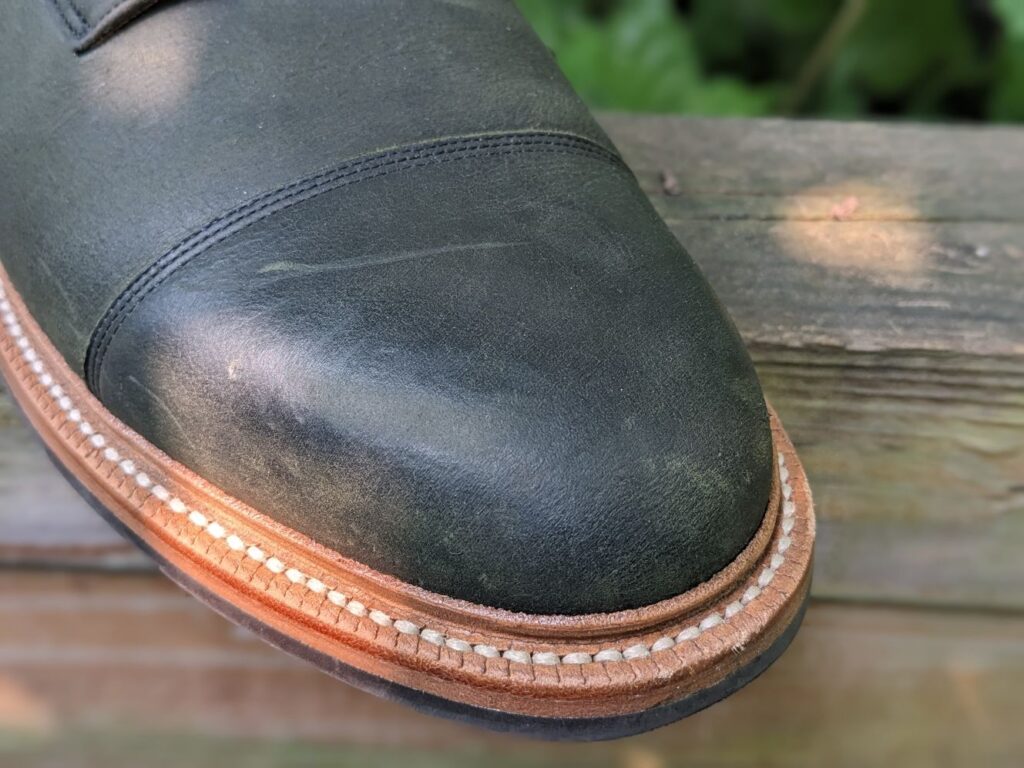
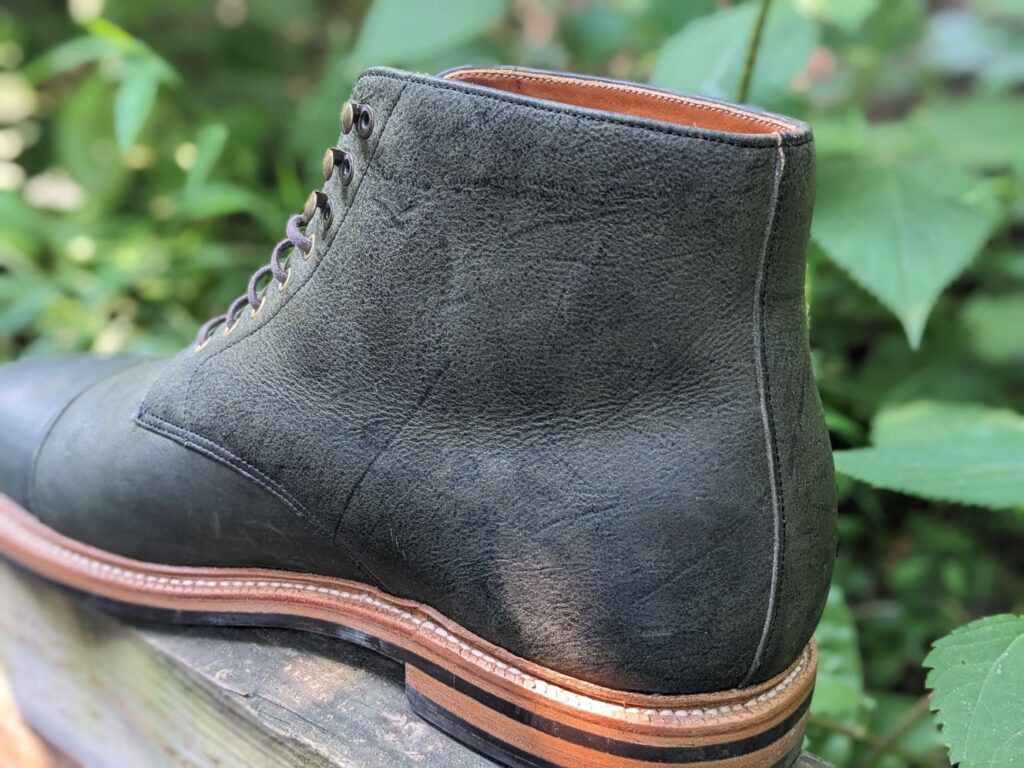
In addition to the scrapes and bumps that Kudu naturally picks up with time, there has been a clear shift in overall color and texture. On areas where there is structure underneath – such as the heel cap and the toe – the leather has smoothed out. Almost becoming glossy. On the other hand, areas without a hard structure have developed deeper creasing and folds.

This divergence in evolution means you can actually see the internal structure of the boot through the exterior leather. Kind of cool!
There has also been a change in the color of the leather as well. The deep forest green has faded somewhat into a more muted tone. It’s definitely still green in the sun, but can appear a bit closer to charcoal in the shade. While I personally loved the vibrancy of the original color, if I’m going to be honest with myself the newer color is a bit more wearable.
One area that didn’t change is the stitching. Everything has kept tight, with no popped threads or loose eyelets.
Mid- and Outsole
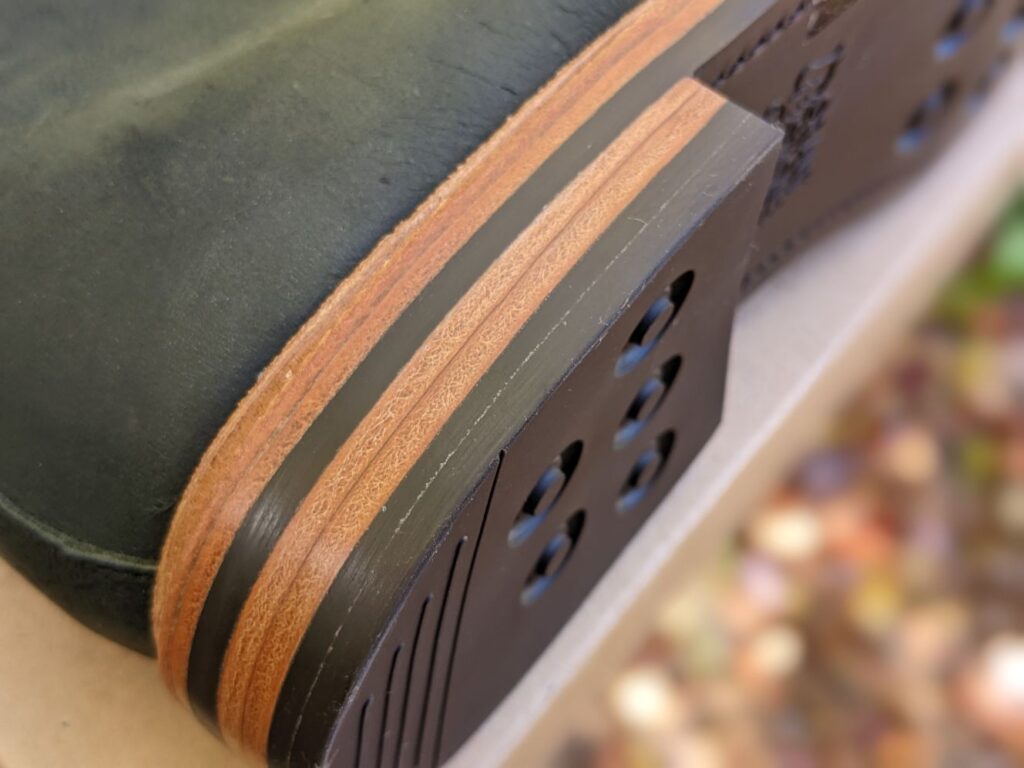
Whereas the upper on the Grant Stone Cap Toe in Forest Kudu changed dramatically, the opposite is true for the bottom half of this boot. In fact, these don’t look all that different than they did after 10 wears.
The outsole has held up amazingly well, and there are no loose threads at all. Even the color of the midsole has stayed a wonderful honey brown.
Summary
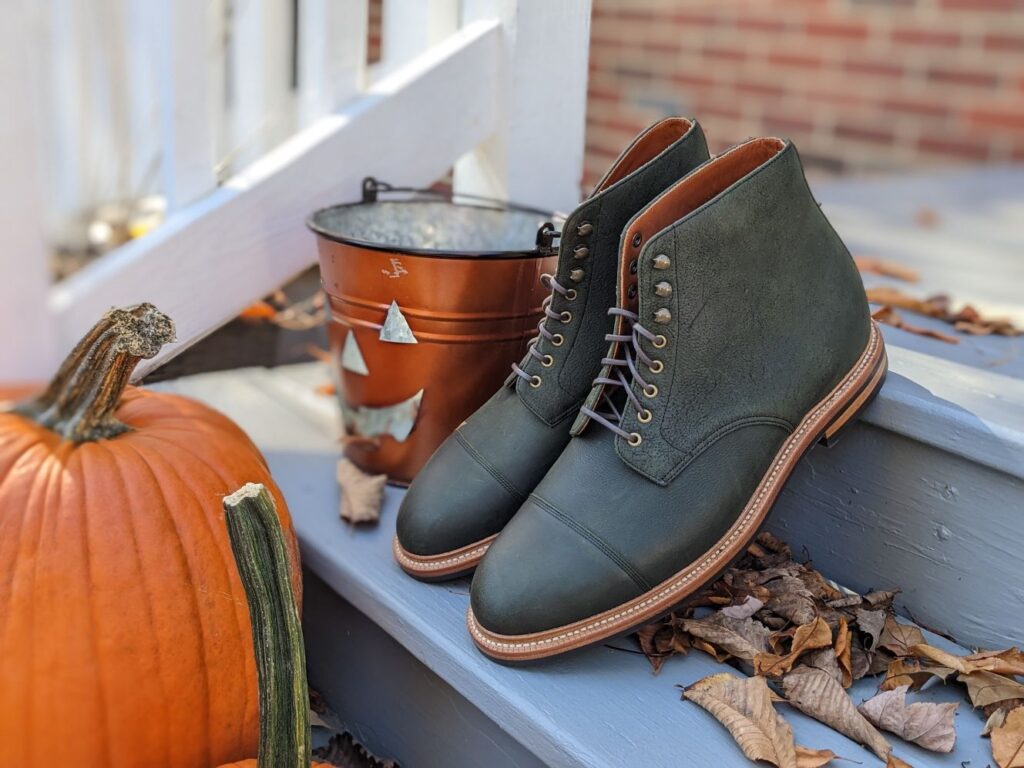
While I still enjoy this boot a lot, the overall appearance has changed from day one. The permanent scrapes and evolving texture have moved these boots squarely into the casual side. At least they do for me.
I’m still most likely to pair these with some khaki-colored chinos, but this change means that denim works as well. You can also add a sweater to the polo/oxford I mentioned in the original review, but I have stopped bringing these to the office.
All that being said, they are still a cap toe service boot. In other words, they charm of looking a bit more put together than other boot options out there.
Fit & Comfort
Fit
The last that Grant Stone uses for their Cap Toe in Forest Kudu – the Leo – is one of my favorite lasts. Similar to Alden’s Barrie, with just a bit more toe space and a bit less heel space, it is pretty accommodating for almost every foot shape.
I have to flag – unlike any other pair of Grant Stone’s I’ve ever owned, these have stretched slightly with wear. This hasn’t happened in any other of their footwear, including ones made with suede. You should never buy a pair of boots expecting them to stretch to fit, but still, something to be aware of. I’ve just started to wear slightly thicker socks with mine compared to new.
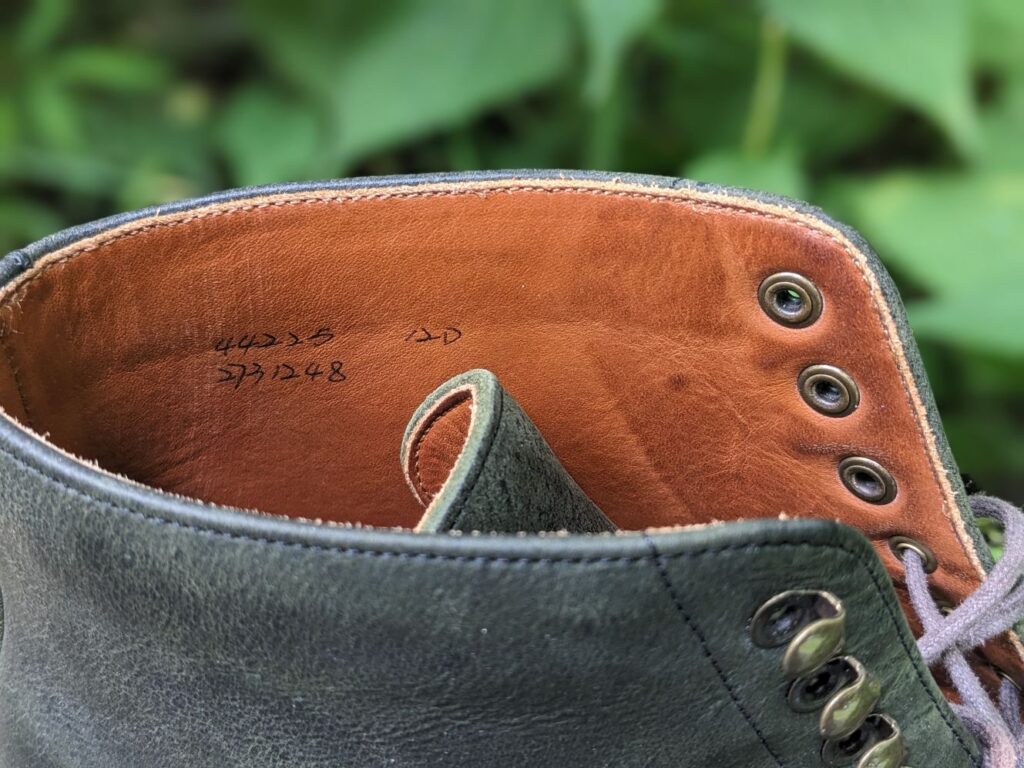
The good news is that it’s pretty easy to nail sizing on these. In addition to being available in a number of different sizes, you can also get them in D (which is really more like an E), E, and EEE.
I took these in a size 12, which is my typical stitched footwear size. For comparison, I wear an 11.5 E in Viberg, 12 in Alden, and 12 in Allen Edmonds.
Comfort
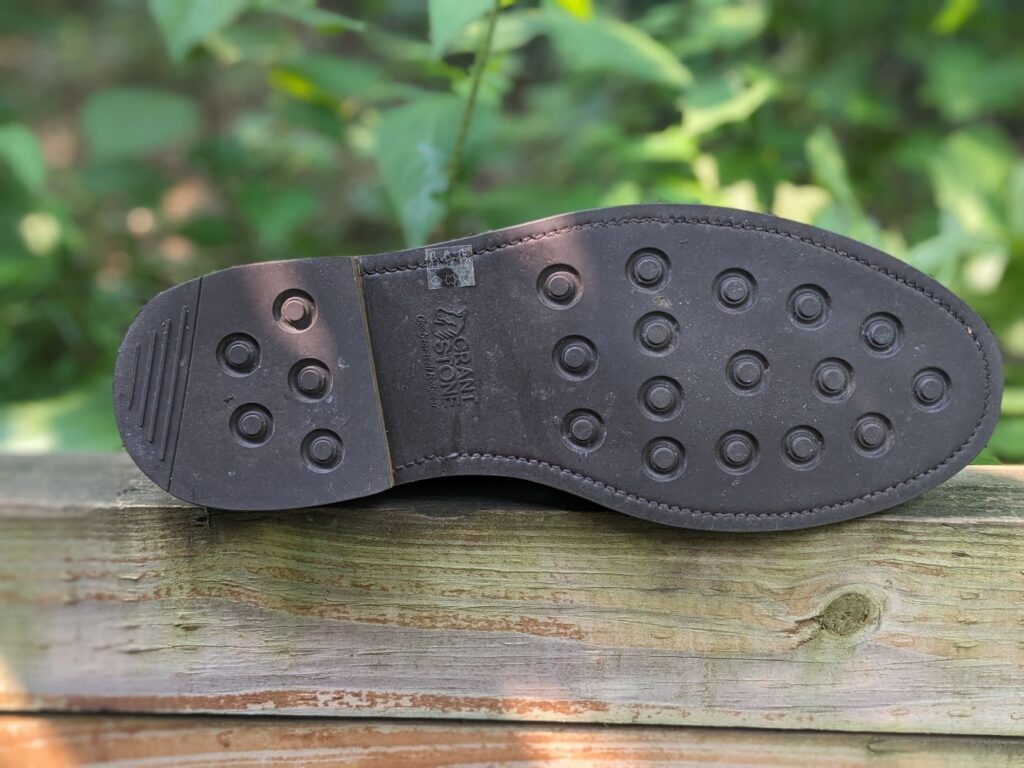
Just like new, the Grant Stone Cap Toe in Forest Kudu is an incredibly comfortable pair of boots. The supportive midsole and soft upper mean there is no concern wearing these all day, even on day one. For the most part, they have only improved with wear.
I do say for the most part, because there is one complaint I have with these boots and it’s in the comfort section. After about 25 wears, one of the boots started to develop some cracking or folding in the insole. It’s almost imperceivable to the eye – and would have been impossible to catch in production – but you can feel it as you walk around.
I wouldn’t go so far as to say it’s uncomfortable, rather it’s something that you notice when walking around. It has started to flatten out again with wear. I’ll be sure to update this review down the line to see if it’s completely resolved itself or not.
Materials & Construction
Materials
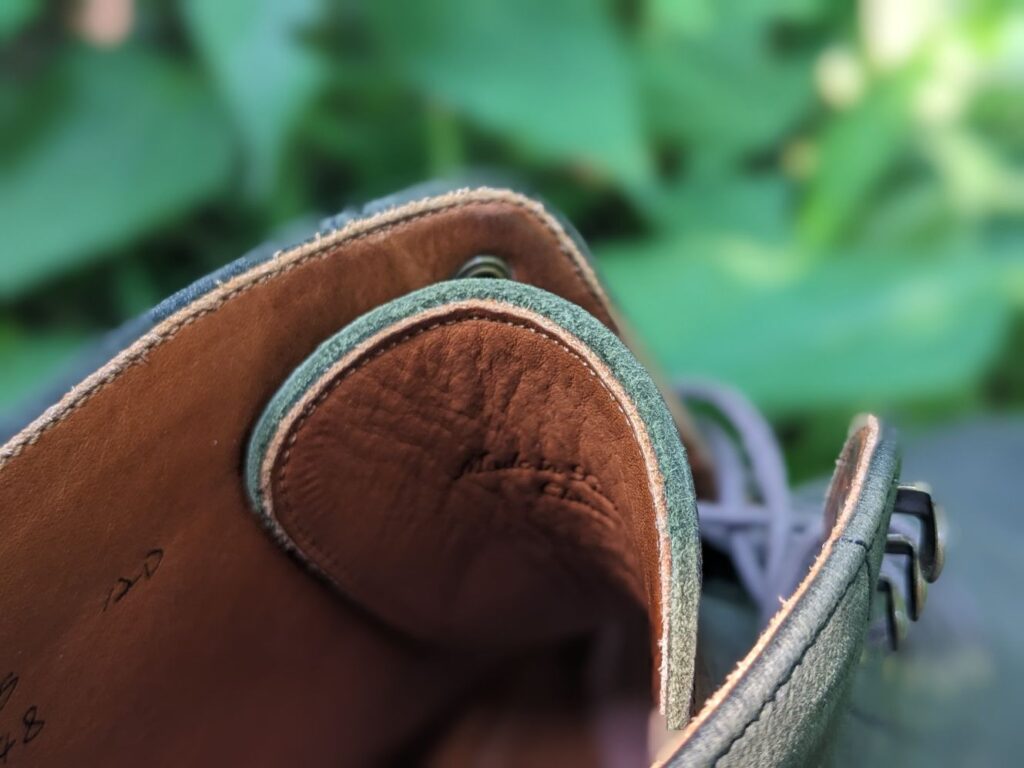
How could I start anywhere but the kudu leather? It’s why you pick the Grant Stone Cap Toe in Forest Kudu over other, more common options. The kudu leather that makes up the upper is really something else. As I mentioned above, it’s evolved significantly with wear, which is really cool to see.
It is also the thirstiest leather I’ve ever had on a pair of footwear. When I conditioned these for the first time, the leather absorbed the conditioner like putting it in a sponge. You’d wipe your finger over them, and it’d be completely dry where you started your swipe at the end It took 2 coats to even notice I had conditioned it, and that was after just a 8 or so weeks of semi-regular wear.
Just be a bit careful, it’s really easy to over condition this leather as well.
Elsewhere, Grant Stone uses kip lining, real brass hardware, and waxed cotton laces. Underneath, veg tanned insoles and midsoles hide a steel shank. A rubber, self-branded outsole finishes everything off. This outsole feels quite soft, but has shown to be pretty durable.
Construction
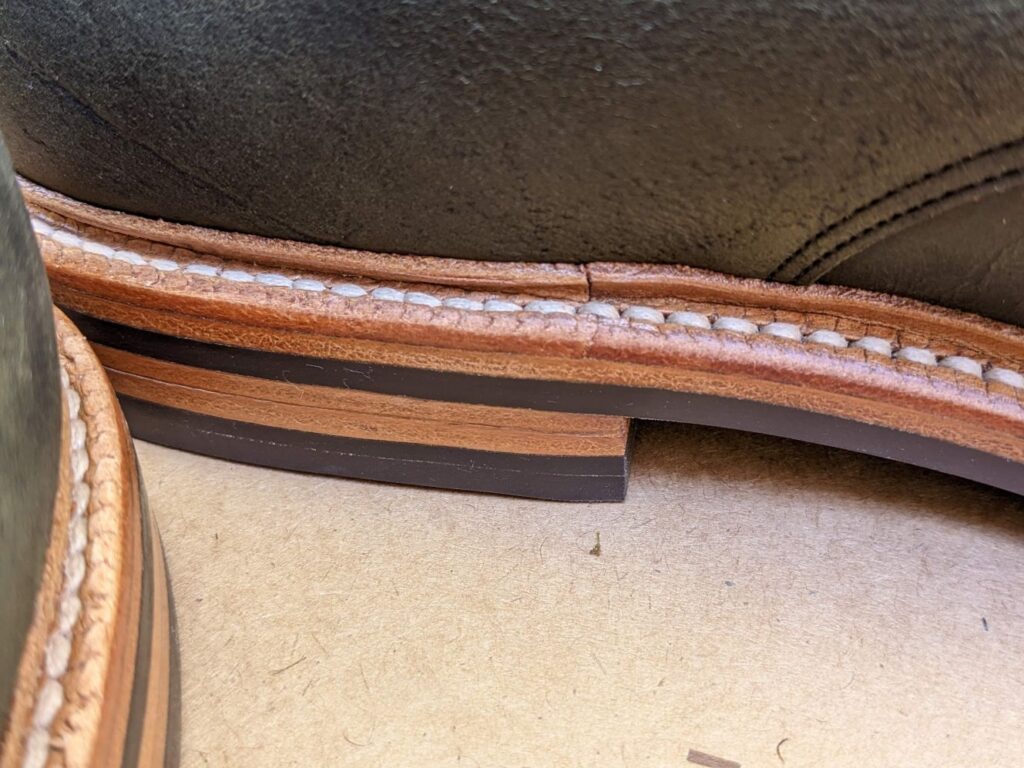
Grant Stone makes all of their footwear using Goodyear welting, and this Cap Toe in Forest Kudu is no exception.
If you want a more complete explanation of what Goodyear welting is, click here. The short version is that when making footwear this way, a piece of leather – known as a welt – is attached along the edge of the upper. The outsole is then sewn to the welt, rather than the upper itself. This means that the part of the boot that gets worn out during resoles is the welt rather than the upper. If that welt gets damaged, you can replace it with a new one.
Most people consider Goodyear welting to be the best overall option for making quality footwear. It offers easy resoleability, above average weather resistance, and a classic design. There are some drawbacks, though. This style of construction can take a while to break in, and both costs more and is heavier than alternatives such as stitchdown or blake construction.
Ease of Care
When it comes to taking care of the Grant Stone Cap Toe in Forest Kudu, maintenance is going to be a bit different than what you might be used to. Deer hides, kudu included, dry out quicker than typical cow hides and are more absorbent when you condition them. That means it’s easier to both under condition and over condition this leather.
This is especially true if the boot gets wet. Deer leathers have larger pores and oils can escape more easily than you might be used to.
For kudu, as opposed to larger animals like elk, standard products work just fine. I find that Bick 4 does a great job for a reasonable price, though I will flag that Grant Stone recommends Venetian Leather Balm. No matter what you pick, it’s best to opt for thinner coats applied more often to make sure you don’t accidentally over condition.
Of course, you’ll want to keep shoe trees in your boots. Grant Stone makes a pair that will look great and match, or you can get something from Amazon.
As for resoling, the good part of this style of construction is that just about any local cobbler should be able to get a new sole on there. Grant Stone does not currently offer resoles on their products directly.
Pricing
Even after 7 months, the Grant Stone Cap Toe in Forest Kudu remains at the same price as before – $370.
At the time of last review, there wasn’t really anything out there to compete with it – other than other Grant Stone offerings, of course. There was a pair of Vibergs for more than 2x the price, or a pair of kind-of-similar-but-not-really Meermins.
However, since then an alternative has come back from the dead – the Spruce Kudu Allen from Parkhurst. Priced at a slightly dearer $388, it is another goodyear welted boot that uses green kudu leather.
Getting your size can be tricky – in fact, despite years of trying, I have not been able to secure a pair of Allens in my size in a leather I want. This makes it tricky to really compare and contrast the two boots.
Are the Grant Stone Cap Toe Worth It?
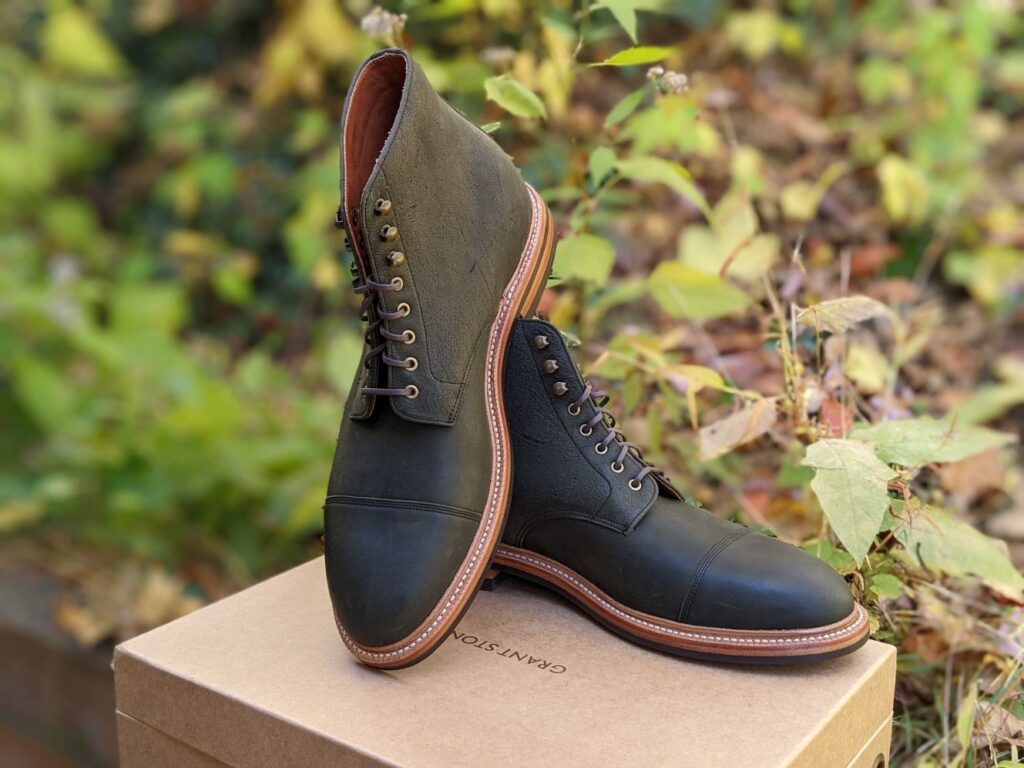
After 5,000 total words written and more than 100 miles in wear, are the Grant Stone Cap Toe in Forest Kudu worth it? I’d give them a resounding yes.
Of course, if you’re buying for first pair of boots, you probably don’t want to get a pair in green that is covered with scars. These don’t go with everything, and when you wear them, you will be the guy wearing green boots. However, if you already have a pair in black and brown, it’s impossible to ignore how cool these are.
The vibrant green color out of the box allows you to appreciate the patina that these develop over time. It also offers something different to the sea of medium brown boots.
They should also just be good, long-lasting footwear. I’ve been amazed by the durability of the outsole; it feels like it’d wear at twice the amount it has. With regular, and careful, conditioning I don’t see how this pair wouldn’t last you for a decade or more.
Getting similar quality production outside of Grant Stone could easily cost you twice as much. These are definitely worth a pick up.